EN

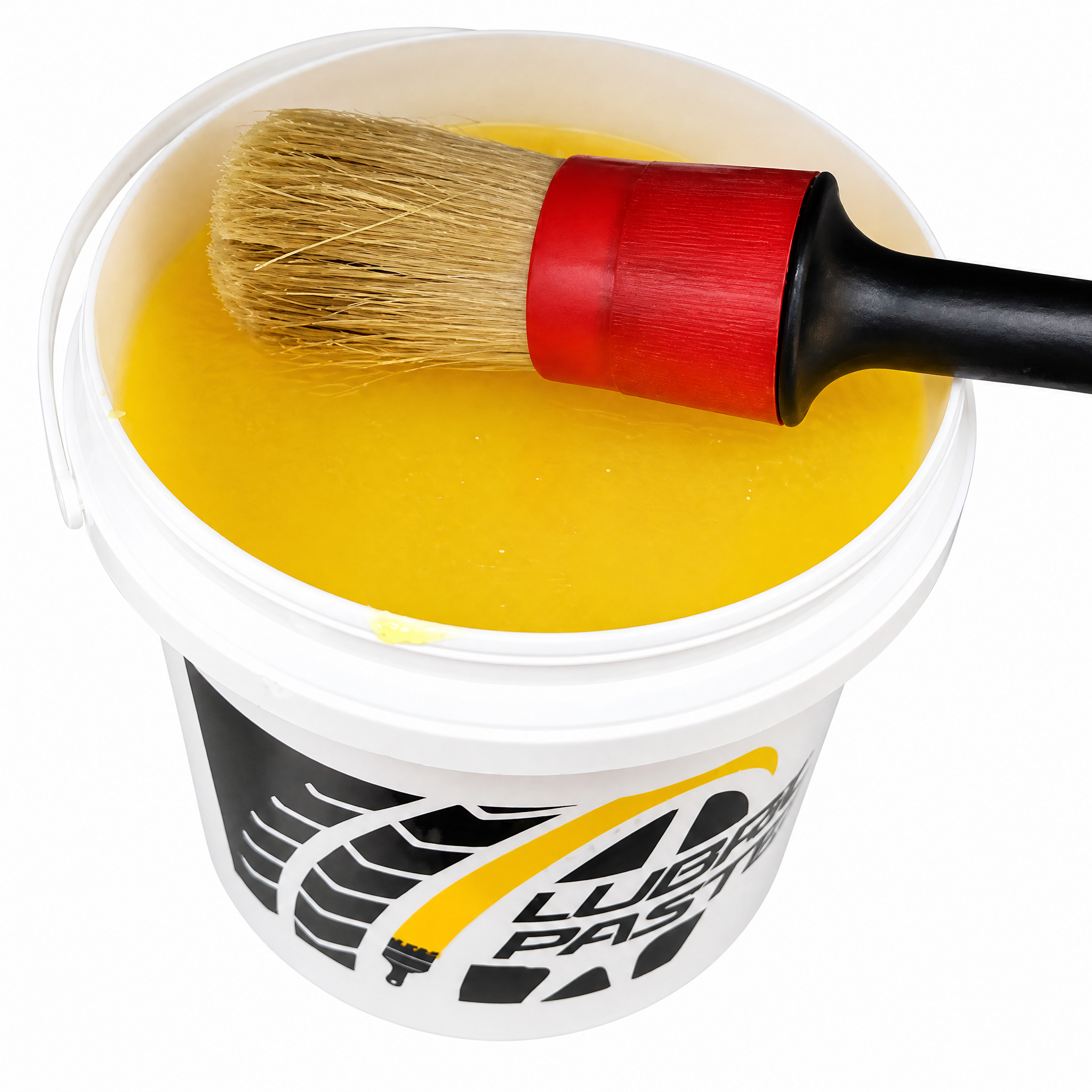
The Science of Viscosity: Why Rheology Dictates Bead Seating Success
The rheological properties of a tire mounting paste determine how smoothly the bead slides over the rim and locks into place. Viscosity—the fluid’s resistance to flow—is the central parameter that orchestrates this process. When the paste’s behavior under stress matches the forces involved in mounting, operators achieve consistent, damage-free seating. The following sections break down the two key rheological behaviors—shear-thinning and yield stress—and the consequences when viscosity is mismatched.
Shear-thinning vs. yield stress behavior: How paste flow responds to mounting force and bead deformation
Shear-thinning describes a paste that becomes less viscous when force is applied. As the mounting machine presses the tire bead over the rim flange, the paste flows easily, reducing friction and the required mounting force by up to 25% (Tire Technology International, 2021). This behavior is essential for high-speed assembly lines where low-profile tires demand rapid, controlled bead drop. Yield stress, by contrast, is the minimum force needed to initiate flow. A paste with a designed yield stress stays in place on the bead during storage and transport but liquefies only when the mounting force exceeds that threshold. This dual nature prevents sagging and ensures lubrication begins exactly when needed. For performance tires—where bead deformation is minimal—a pronounced shear-thinning profile with a moderate yield stress allows the paste to coat the bead-rim interface instantly, then revert to a tackier state once the force is removed, aiding immediate bead lock.
Viscosity mismatch consequences: Slippage, rim damage, and failed seating in high-stress applications
Using a paste with viscosity that does not match the tire type and mounting conditions leads to predictable failures. A paste that is too thin will squeeze out from the bead-rim contact area, causing metal-to-rubber friction, slippage, and failure of the bead to climb over the rim’s hump—often leaving permanent scratches or gouges. Conversely, an overly thick paste resists flow, generating high friction and heat that can deform the bead toe or even tear the rubber. In heavy-duty truck and agricultural tires—where bead forces are extreme—a shear-stable viscosity is critical. Research indicates that over 30% of bead seating failures in these applications stem from incorrect paste rheology (Tire Industry Association, 2022). The result is not only immediate mounting rejects but also latent damage, such as micro-cracks that propagate under service loads, leading to premature tire failure.
Tire Type Classification and Corresponding Tire Mounting Paste Viscosity Requirements
The ideal viscosity of a tire mounting paste is not universal; it must match the tire’s construction and sidewall characteristics. Each category demands a paste that balances slip during mounting with the tack needed for secure bead seating—preventing slippage and rim damage.
Low-profile & performance tires: High-viscosity tire mounting paste for controlled bead drop and rim lock
Low-profile tires feature stiff, short sidewalls that resist flexion. This rigidity demands a high-viscosity tire mounting paste that delivers immediate hold—resisting the bead’s tendency to spring back or slip during inflation. A study by a leading industry association found that 68% of bead seating failures in ultra-low aspect ratio tires trace back to lubricant that is too thin (Tire Industry Association, 2022). The right paste creates a high-friction, gel-like layer: it allows the bead to glide over the rim flange slowly, then locks into place without bouncing. Its body prevents premature bead drop, ensuring controlled mounting. A tacky, high-viscosity formula also shields the rim edge from scratches as the stiff bead forces its way over the rim—critical for tires with aspect ratios under 40%.
Truck, agricultural, and OTR tires: Shear-stable, tack-enhanced tire mounting paste for heavy-bead engagement
Heavy-duty tires used on trucks, tractors, and off-the-road (OTR) equipment generate extreme mounting forces—the bead alone can weigh over 30 kg and encounter high shear stress during installation. A standard paste may thin out under pressure, causing the bead to seize or slip abruptly. A shear-stable, tack-enhanced tire mounting paste maintains viscosity under load, preserving consistent film strength to let the bead slide smoothly onto the seat. The added tack helps the bead grip the rim instantly after seating, reducing rotation risk under high torque. Field data from agricultural fleets shows that switching to a shear-stable paste cuts bead unseating incidents by 45% during heavy plowing operations (Tire Industry Association, 2023). It also protects rims from corrosion caused by water and mud intrusion—a common issue in OTR environments.
EV, run-flat, and radial tires: Balanced viscosity formulations supporting thermal stability and post-mount adhesion
Electric vehicle (EV) and run-flat tires generate more heat due to higher load capacities and stiff sidewall reinforcements. A mounting paste for these types must maintain lubricity without breaking down at elevated temperatures. A balanced viscosity formulation prevents premature drying—which could cause bead cracking during inflation—and ensures the bead remains securely adhered to the rim after the vehicle is in motion, where sustained heat cycles can soften lesser compounds. Radial tires, with their flexible sidewalls, need a paste that does not interfere with natural flex. A medium-viscosity paste provides enough slip for easy mounting but dries to a non-slippery film, preserving dynamic balance. A survey of EV service centers found that 62% of technicians prefer a paste that remains tacky after curing—specifically to maintain a consistent rim seal and prevent slow air leaks (Tire Industry Association, 2023). This post-mount adhesion is critical for maintaining tire pressure and safety.
From Lubrication to Lock: How Modern Tire Mounting Paste Evolves During Installation
Dual-phase rheology: Slip-on-application and tack-on-drying — a breakthrough in tire mounting paste functionality
Traditional lubricants served a single, temporary purpose: reducing friction for bead slide. The Technology and Maintenance Council’s RP 205 emphasizes that a lubricant must remain liquid during mounting but dry soon after to prevent post-installation rim slip. Modern tire mounting paste transcends this by engineering a dual-phase rheological profile. During initial deflection, the paste exhibits shear-thinning behavior—providing a low-viscosity, lubricious film that allows the bead to glide over the rim flange with minimal force. Once the bead is seated and shear forces cease, the formulation’s chemistry initiates a phase change: the water carrier evaporates, leaving behind a high-tack, adhesive layer that locks the bead to the rim. This “slip-then-grip” mechanism eliminates the trade-off between easy mounting and long-term security—effectively preventing bead unseating in low-inflation or high-torque scenarios.
Selecting the Right Tire Mounting Paste: A Practical Viscosity Decision Framework
To choose the right tire mounting paste, follow a systematic evaluation of key factors:
- Tire type and bead design: Match paste viscosity to the required bead control. High-viscosity formulations (above 100,000 cps) provide the lock needed for low-profile tires, while shear-stable, tack-enhanced pastes ensure heavy-bead engagement in truck and OTR applications.
- Application environment: Consider temperature and humidity, which affect paste flow and drying time. For EV or run-flat tires, a balanced viscosity with thermal stability prevents premature drying.
- Mounting method: Automated machines may require pastes with precise rheology to avoid slip, whereas manual mounting benefits from forgiving flow properties.
- Post-mount adhesion: Opt for a dual-phase paste that lubricates during installation and then increases tack to secure the bead, preventing rim slip.
This framework ensures the selected tire mounting paste performs reliably across diverse tire types and mounting conditions.
Frequently Asked Questions (FAQ)
Why is viscosity important in tire mounting paste?
Viscosity determines how the paste flows under mounting forces, ensuring secure bead seating without causing damage or slippage.
What is shear-thinning behavior?
Shear-thinning refers to the paste becoming less viscous under stress, making it easier to apply and reducing mounting force.
Why is dual-phase rheology significant?
Dual-phase rheology allows the paste to lubricate during installation and then dry into a tacky adhesive layer, preventing post-installation rim slippage.
What paste viscosity is ideal for heavy-duty tires?
Heavy-duty tires require a shear-stable, tack-enhanced paste to manage extreme bead forces and protect against slippage or damage.
Are special pastes needed for EV and run-flat tires?
Yes, these tires demand balanced viscosity formulations that remain effective under high heat while ensuring secure adhesion after mounting.
Table of Contents
- The Science of Viscosity: Why Rheology Dictates Bead Seating Success
-
Tire Type Classification and Corresponding Tire Mounting Paste Viscosity Requirements
- Low-profile & performance tires: High-viscosity tire mounting paste for controlled bead drop and rim lock
- Truck, agricultural, and OTR tires: Shear-stable, tack-enhanced tire mounting paste for heavy-bead engagement
- EV, run-flat, and radial tires: Balanced viscosity formulations supporting thermal stability and post-mount adhesion
- From Lubrication to Lock: How Modern Tire Mounting Paste Evolves During Installation
- Selecting the Right Tire Mounting Paste: A Practical Viscosity Decision Framework
- Frequently Asked Questions (FAQ)