EN
Why Tire Mounting Paste Prevents Rim Scratches During Installation
The Role of Viscosity and Adhesion in Bead Seating Protection
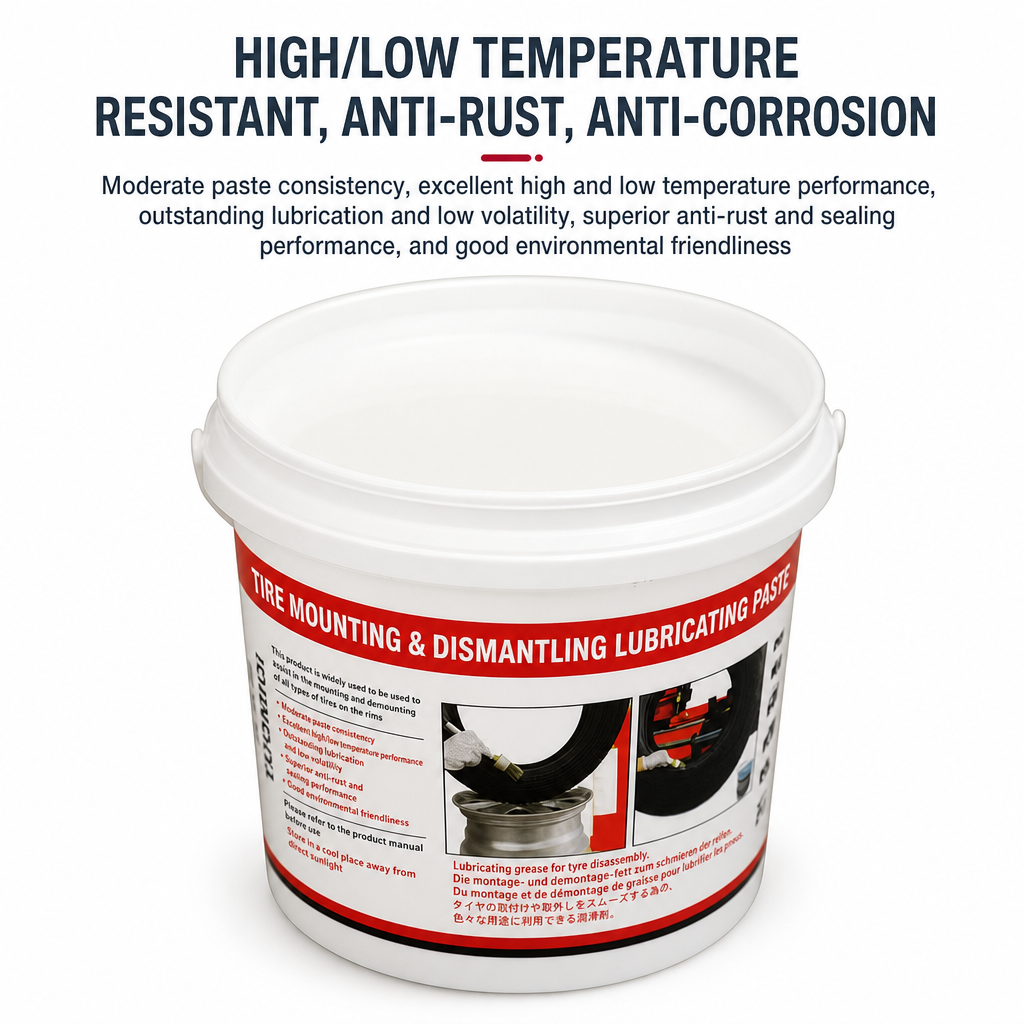
Tire mounting paste forms a durable, high-viscosity film that separates the tire bead from the rim flange during seating—resisting displacement even under extreme pressure as the bead slides over the rim edge. Its strong adhesion binds to both rubber and metal, preventing direct metal-to-rubber contact that causes scratches on alloy or steel wheels. This thick consistency also dampens vibration and reduces the force needed to seat the bead, lowering the risk of bead tearing or folding. Crucially, proper viscosity ensures the paste stays precisely where applied—neither dripping onto the floor nor migrating into the tire cavity—so protection remains consistent from initial tool contact through final inflation. When paired with a clean rim, this adhesive barrier serves as the primary defense against cosmetic damage and micro-abrasions that compromise wheel longevity.
How Tire Mounting Paste Outperforms Liquid Lubricants on Alloy and Machined Surfaces
Unlike liquid lubricants such as soapy water or silicone sprays—which often run off vertical rim surfaces before full bead seating—tire mounting paste remains firmly in place, forming a resilient cushion that withstands repeated sliding without breaking down. This stability is especially critical on alloy and machined wheels, where even minor scratches can expose bare metal to corrosion. Premium pastes contain anti-wear additives and corrosion inhibitors absent in conventional liquids, and they retain film integrity under friction-induced heat. Independent workshop data shows paste reduces bead seating force by 20–30% compared to standard liquids, thanks to superior load-carrying capacity. By minimizing clamping pressure and tool contact, it preserves factory finishes and polished surfaces—and its residue wipes away cleanly without leaving a slippery film that could affect future balance.
Correct Tire Mounting Paste Application: A 3-Step Process
Step 1: Rim Surface Preparation for Optimal Paste Adhesion
A clean, dry rim surface is essential—not just for appearance, but for reliable paste adhesion and scratch prevention. Remove all old rubber residue, dirt, and moisture using a non-abrasive cloth and mild solvent. Even microscopic grit can act as an abrasive under seating pressure, causing micro-scratches on sensitive alloys. After cleaning, inspect the bead seat area for corrosion or pitting; irregularities can prevent uniform paste coverage and increase localized friction. A properly prepped rim allows the paste’s viscosity to bridge tiny imperfections, ensuring smooth, uninterrupted bead travel without direct metal-to-rubber contact—the foundational step for scratch-free installation.
Step 2: Precise Tire Mounting Paste Quantity and 3-Zone Distribution
Applying the right amount of paste is critical: too little risks dry spots and scratching; too much invites slippage and air leakage. A pea-sized dab per 10 cm of rim circumference is a practical starting point, adjustable for larger-diameter wheels. Distribute the paste across three key zones—the inner rim flange, the hump, and the outer bead seat—to ensure full-path coverage, not just initial contact points. Spread evenly with a dedicated brush—avoiding thick globs that obscure seal integrity or trap debris. This method guarantees consistent lubrication while maintaining the friction needed for secure bead lock-up post-inflation.
Step 3: Bead Coverage Technique to Ensure Uniform Lubrication Without Runoff
Coverage technique determines whether lubrication stays effective—or becomes a contaminant. Use firm, overlapping brush strokes to apply a continuous, thin film along the entire bead seat circumference. Avoid heavy, dripping layers that may run down the rim and contaminate brake rotors or sensors. After application, rotate the tire by hand to verify no excess paste extrudes onto the spoke face. Uniform coverage enables incremental, controlled bead articulation—eliminating the sudden jerks and binding that commonly scratch polished or machined rim surfaces.
Common Tire Mounting Paste Mistakes That Cause Damage or Failure
Overapplication Risks: Bead Slippage, Uneven Seating, and Air Leakage
Overapplying tire mounting paste is a leading cause of post-installation failure. Excess paste creates an overly slick interface, reducing the friction required for the bead to grip the rim securely. This leads to slippage during inflation, uneven seating, and micro-gaps that permit slow air leakage. In severe cases, the bead rotates on the rim—causing vibration, premature wear, and compromised handling. A 2022 industry survey found over 20% of post-installation air leaks traced to over-lubrication. To prevent this, apply paste as a thin, uniform film—just enough to reduce friction without sacrificing adhesion. Using a brush or calibrated applicator ensures control; technicians should recognize the correct amount (e.g., a pea-sized dab per bead section) and avoid pooling, which hinders sealing and attracts contaminants.
Using Incompatible Formulations on Coated or Polished Rims
Not all pastes are safe for every rim finish. Some contain petroleum-based solvents or aggressive chemicals that etch clear coats, dull polished aluminum, or discolor chrome. Using a general-purpose paste on high-end coated or polished rims can cause irreversible cosmetic damage. A 2021 wheel manufacturer service bulletin linked 15% of finish-related warranty claims to improper lubricant choice—citing micro-cracking and peeling from solvent-rich formulations. Water-based, pH-neutral pastes are recommended for these surfaces, delivering effective lubrication without chemical attack. Always verify compatibility with the rim material before use; a spot test on an inconspicuous area is a simple, low-risk safeguard. Many premium brands now offer rim-specific formulations, and consulting the rim manufacturer’s guidance remains the most authoritative way to protect both appearance and performance.
FAQs About Tire Mounting Paste
1. Why is tire mounting paste more effective than liquid lubricants?
Tire mounting paste offers superior viscosity and adhesion, staying in place during installation and forming a cushion against scratches. Liquid lubricants often run off or fail to provide consistent coverage, especially on vertical surfaces.
2. How much tire mounting paste should I use for each installation?
A pea-sized dab per 10 cm of rim circumference is a recommended amount. This ensures sufficient coverage without risking overapplication that could lead to slippage or air leaks.
3. Can I use tire mounting paste on all types of rims?
Not all pastes are compatible with every rim finish. Check for formulations that are water-based and pH-neutral for coated or polished finishes to avoid cosmetic damage.
4. What happens if I overapply tire mounting paste?
Overapplication can cause bead slippage, uneven seating, and air leakage. It may also attract contaminants that hinder proper sealing.
5. How do I prepare rims before applying tire mounting paste?
Rims should be cleaned, dried, and inspected for imperfections or corrosion before applying paste for optimal adhesion and scratch prevention.
Table of Contents
- Why Tire Mounting Paste Prevents Rim Scratches During Installation
- Correct Tire Mounting Paste Application: A 3-Step Process
- Common Tire Mounting Paste Mistakes That Cause Damage or Failure
-
FAQs About Tire Mounting Paste
- 1. Why is tire mounting paste more effective than liquid lubricants?
- 2. How much tire mounting paste should I use for each installation?
- 3. Can I use tire mounting paste on all types of rims?
- 4. What happens if I overapply tire mounting paste?
- 5. How do I prepare rims before applying tire mounting paste?