EN

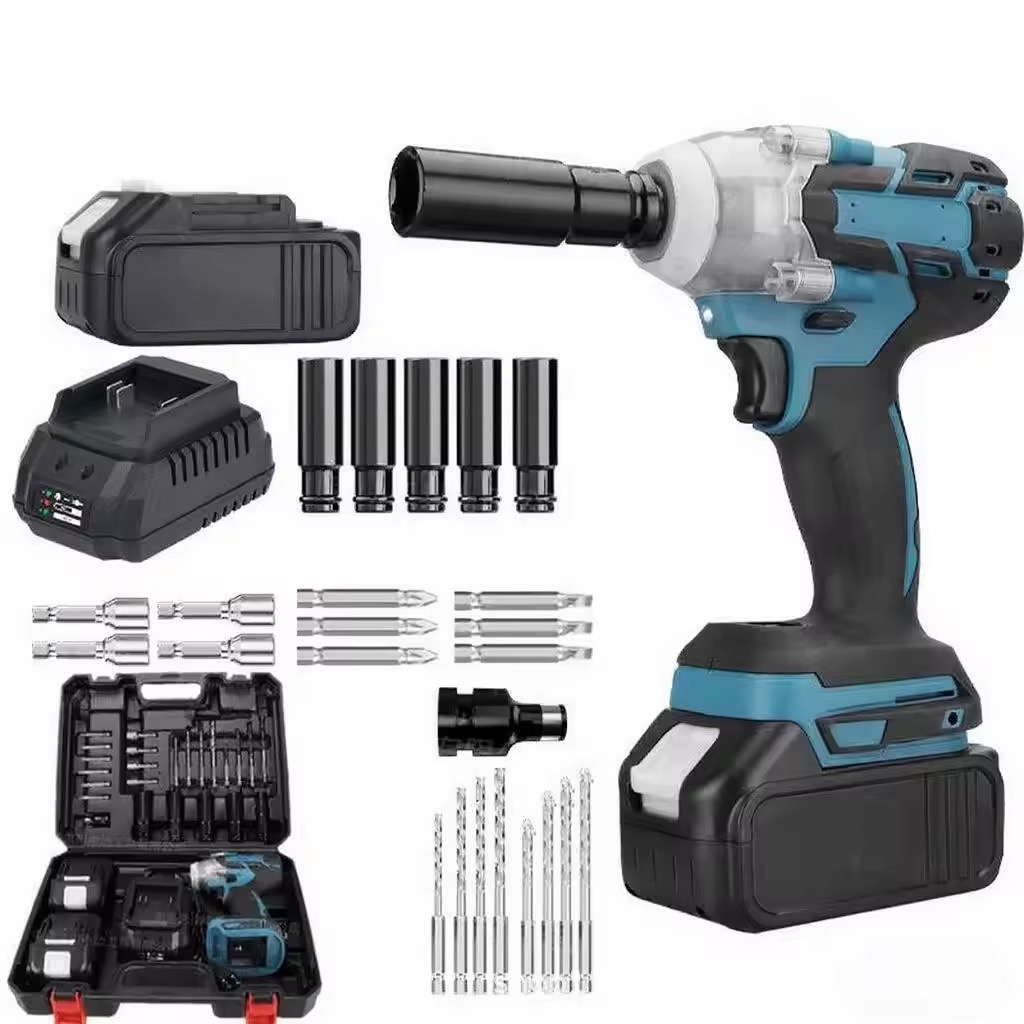
How Torque Adjustment Defines Performance and Safety in a Battery Impact Wrench
The Core Distinction: Kinetic Energy Delivery vs. Repeatable Torque Control
A manual click-style torque wrench applies steady rotational force and measures physical resistance directly; when the fastener reaches its set value, an internal spring releases to signal completion. A battery impact wrench operates differently: a motor spins a spring-loaded hammer that strikes an anvil, delivering bursts of kinetic energy—not continuous torque. Crucially, lowering the power setting on most cordless impact wrenches adjusts RPM or impacts per minute (IPM), not torque output itself. As a result, the same dial position can produce widely varying clamping force depending on battery charge, socket weight, anvil wear, and fastener condition. For repeatable torque control, users must pair the tool with a torque-limiting socket, electronic auto-stop mode, or final verification using a calibrated torque wrench. Field audits from 2023 confirmed that dial-only adjustment yields ±18% scatter on identical fasteners—highlighting why treating an impact wrench as a precision measuring instrument is both inaccurate and unsafe.
Real-World Evidence: Torque Consistency Testing Across Top Battery Impact Wrench Models
Independent bench testing of premium cordless impact wrenches in 2023 revealed that hammer-anvil designs alone rarely achieve target torque values. At a 150 ft-lb specification, measured outputs across leading models ranged from 128 to 174 ft-lb. Variance widened as battery voltage dropped and when operators used different sockets or extension lengths. Models with electronic auto-stop presets performed significantly better, staying within ±5–8% of target in most runs. In contrast, standard manual-trigger configurations varied by ±15–20% under identical test conditions—even minor differences in trigger discipline or socket engagement altered peak torque by more than 10%. The table below summarizes typical repeatability across common torque adjustment methods.
| Control Method | Typical Torque Variance | Recommended Use |
|---|---|---|
| Standard hammer-anvil impact mode | ±15–20% | Removal, rough fastening |
| Electronic auto-stop preset | ±5–8% | Production fastening |
| Calibrated manual torque wrench | ±4% | Final torque verification |
Consequences of Uncontrolled Torque in Battery Impact Wrench Applications
Mechanical Failure: Stripped Threads, Sheared Bolts, and Material-Specific Limits
Uncontrolled torque frequently exceeds the elastic limit of fasteners. When peak torque overshoots the thread’s designed clamp load, threads strip or bolts shear under load. Soft metals—including aluminum and magnesium—tolerate far less peak torque than hardened steel; a setting safe for steel may permanently deform an alloy wheel seat or engine case flange. Repeated uncontrolled impacts also generate fatigue micro-cracks that propagate long after assembly. In production environments, operators relying solely on subjective trigger feel—without calibrated auto-stop—introduce variability tied to battery charge, socket wear, and joint stiffness. The outcome isn’t just a failed fastener—it’s a hidden discontinuity that risks field failure, costly rework, and damage to mating components. Controlled torque limits mitigate these risks at the source.
Critical Safety Risks: Over-Tightened Lug Nuts on EVs and Light-Duty Trucks
Over-tightened lug nuts represent a serious safety hazard when battery impact wrenches are used without verified torque adjustment. On electric vehicles (EVs) and light-duty trucks, hub motors, aluminum knuckles, and thin brake rotor hats are especially sensitive to clamp-load variation. A wheel stud tightened beyond yield may fail catastrophically at highway speed, causing wheel separation. EV regenerative braking introduces frequent thermal cycling, accelerating crack growth in over-stressed studs. Correct lug nut torque—typically 100–150 N·m depending on model—cannot be judged by hammering time or sound. Without a calibrated torque stick or final manual torque wrench check, even experienced users routinely exceed safe limits. That margin leaves no safety buffer. Controlled torque adjustment is therefore not optional—it’s a fundamental vehicle safety requirement.
Torque Adjustment Capabilities Across Modern Battery Impact Wrench Designs
Simulated Control Methods: Auto-Stop, Power Presets, and Trigger Sensitivity
Modern battery impact wrenches rely on simulated, not direct, torque control. Auto-stop modes use motor current or anvil rotation sensors to cut power near a preset threshold. Power presets limit output to approximate fastening levels, while trigger sensitivity modulates speed and impact frequency. Though these features improve repeatability, they remain indirect proxies. A leading manufacturer’s internal validation reported ±8% to ±12% repeatability on medium-hard joints (2023). Because systems estimate torque from motor performance—not mechanical output—battery charge, socket mass, and joint stiffness shift results. Auto-stop may trigger early on hard joints and late on soft ones. While higher-voltage platforms and brushless motors improve consistency, they do not eliminate variation. Users should treat displayed torque values as reference points—not certified measurements.
The Calibration Gap: Why Most Battery Impact Wrenches Lack True ISO 6789 Compliance
The calibration gap is structural. ISO 6789:2017 sets a maximum permissible error of ±4% for indicating torque tools—but it assumes controlled, quasi-static tightening. Cordless impact tools deliver torque in rapid, high-energy impulses, making traceable dynamic measurement difficult without external rotary torque sensors. Most factory “calibration” procedures verify only free speed, motor current, or static sensor output—not actual fastening torque under load. Independent audits of mid-range cordless tools report field repeatability between ±10% and ±15% (2024), even for models with digital displays and auto-stop—because displayed torque is derived from motor feedback, not calibrated mechanical output. For critical fasteners, final verification with a calibrated torque wrench remains essential.
Best Practices for Reliable Torque Adjustment with a Battery Impact Wrench
The Incremental Approach: Start Low, Validate, Then Optimize — Aligned with SAE J2724
Reliable torque adjustment begins at the lowest power setting. Test on a scrap fastener or accessible joint before final tightening—and always validate with a calibrated torque wrench, since impact mechanisms do not report true torque directly. If the reading falls within the target range, retain the setting. If not, increase power incrementally and retest. This start-low, validate, then optimize sequence supports consistent fastening and prevents over-tightening. Always operate with a fully charged battery to ensure stable output, and recalibrate your tactile familiarity with the tool before each production run. This approach aligns with SAE J2724 guidance for controlled fastening in automotive service and manufacturing.
FAQ
What is the difference between torque and impact in a battery impact wrench?
Torque refers to the rotational force applied to fasteners, while impact describes the kinetic energy delivered in short bursts. Most battery impact wrenches adjust RPM and impacts per minute rather than the actual torque output.
Why can’t you rely solely on a battery impact wrench for precise torque?
Battery impact wrenches do not provide direct torque measurement. The actual clamping force can vary based on factors like battery charge, socket weight, and anvil wear. For precise torque, use a torque-limiting device or a calibrated torque wrench for final verification.
What are the risks of over-tightening fasteners?
Over-tightened fasteners can strip threads, shear bolts, and cause permanent damage to materials like aluminum or magnesium. In vehicles, over-torquing lug nuts can lead to safety hazards, such as wheel separation while driving.
Do all battery impact wrenches comply with ISO 6789 standards?
No, most battery impact wrenches do not meet ISO 6789:2017 standards, which are designed for controlled, static torque tools. These power tools deliver torque in dynamic impulses, and their output is estimated based on motor performance rather than being directly measured and calibrated.
What are the best practices for using a battery impact wrench?
Start with the lowest power setting and test on a scrap fastener or accessible joint before final use. Validate the torque using a calibrated torque wrench and make incremental adjustments. Always use a fully charged battery and retest settings before starting a new task.
Table of Contents
- How Torque Adjustment Defines Performance and Safety in a Battery Impact Wrench
- Consequences of Uncontrolled Torque in Battery Impact Wrench Applications
- Torque Adjustment Capabilities Across Modern Battery Impact Wrench Designs
- Best Practices for Reliable Torque Adjustment with a Battery Impact Wrench
-
FAQ
- What is the difference between torque and impact in a battery impact wrench?
- Why can’t you rely solely on a battery impact wrench for precise torque?
- What are the risks of over-tightening fasteners?
- Do all battery impact wrenches comply with ISO 6789 standards?
- What are the best practices for using a battery impact wrench?