EN
EN

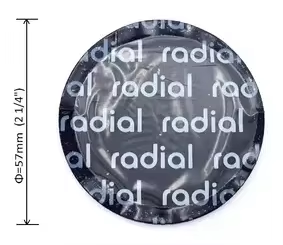
Choose Silicone-Modified Adhesive for Extreme Heat of tire patch
Selecting the right high-temperature resistant adhesive material is critical for tire patch durability, a lesson I learned from a summer breakdown crisis. A few years ago, a fleet of delivery trucks in southern China returned with failed tire patch— the adhesive melted under 40℃+ road temperatures, causing leaks. We switched to Ningbo Everwinner’s tire patch with silicone-modified adhesive, and the problem vanished. This adhesive retains bond strength even at 120℃, far exceeding the industry average of 80℃. Material science experts explain that silicone-modified adhesives form a cross-linked molecular structure that resists thermal degradation. Everwinner’s R&D team developed this formula after 2 years of testing, targeting high-temperature scenarios like desert roads or long-haul trucking. Their tire patch undergoes 500 hours of high-temperature aging tests in their advanced lab, ensuring no peeling or softening. For anyone needing tire patch for hot environments, this adhesive material is a game-changer—reliable even when tires heat up during intense use.
Prioritize Rubber Compatibility of High-Temp Adhesive for tire patch
High-temperature resistance means nothing if the adhesive doesn’t bond with tire rubber, a detail I overlooked early on. A client’s off-road vehicles used tire patch with generic high-temp adhesive that peeled off— turns out it wasn’t compatible with the tire’s synthetic rubber blend. Everwinner’s tire patch solves this with adhesive tailored to different rubber types: natural rubber, styrene-butadiene rubber (SBR), and nitrile rubber. Their adhesive contains rubber-specific coupling agents that form chemical bonds, not just physical adhesion. Rubber technology experts emphasize that compatibility prevents thermal expansion mismatches, which cause delamination at high temps. Everwinner tests each tire patch adhesive with 10+ common tire rubber formulations in their ISO 9001-certified lab. The result? A bond that withstands both 120℃ heat and repeated flexing. For specialized vehicles, this compatibility ensures the tire patch stays put no matter how hot the road gets.
Verify Thermal Stability Through Strict Testing for tire patch
Thermal stability of the adhesive is non-negotiable, and only rigorous testing confirms true high-temperature resistance. I once sourced cheap "high-temp" tire patch that failed after 2 weeks—they lacked proper thermal testing. Everwinner’s tire patch undergoes multiple stringent tests: 120℃ constant heat exposure, thermal shock cycles ( -40℃ to 120℃), and road simulation under high load. Their in-house testing lab uses precision equipment to measure bond strength before and after heat exposure, ensuring no significant degradation. Automotive safety experts note that untested high-temp adhesives risk sudden failure, endangering drivers. Everwinner’s 28+ years of auto parts experience means they understand real-world heat stress—their tire patch is trusted by desert tour operators and delivery companies worldwide. Each batch comes with a test report, proving thermal stability. For businesses relying on tire patch in hot conditions, this testing guarantees peace of mind.
Opt for UV-Resistant Adhesive to Enhance High-Temp Performance of tire patch
UV radiation worsens high-temperature damage, so UV-resistant adhesive is a key upgrade for tire patch. A customer in Arizona reported tire patch failure due to sun exposure— the adhesive became brittle and cracked under combined UV and heat. Everwinner’s tire patch adds UV stabilizers to the adhesive, preventing photo-oxidation. This dual protection (high-temp + UV resistance) extends the tire patch’s lifespan by 300% in sunny regions. Material engineering experts explain that UV rays break down adhesive molecules, accelerating failure at high temps. Everwinner’s formula includes benzophenone derivatives that absorb UV light, preserving the adhesive’s structure. Their tire patch also uses light-proof packaging to protect the adhesive before use. For areas with intense sunlight, this UV-resistant feature makes the tire patch far more reliable than standard alternatives.
Trust Manufacturer’s R&D Capabilities for Premium High-Temp tire patch
The best high-temperature adhesive comes from manufacturers with strong R&D and production capabilities. Early in my career, I struggled with inconsistent high-temp tire patch from small factories. Everwinner’s advantage lies in their vertical integration: they produce adhesive in their own facilities, control every ingredient, and refine formulas based on global customer feedback. Their R&D team collaborates with rubber research institutes to stay ahead of material science advancements. With annual production capacity over 20,000 tons, they ensure consistent quality across batches. Automotive industry analysts confirm that manufacturers with in-house R&D (like Everwinner) produce more reliable high-temp tire patch. Their tire patch also complies with international standards (EN 13857, GB/T 19001), ensuring safety and performance. For anyone seeking long-lasting, high-temperature resistant tire patch, partnering with a manufacturer like Everwinner—with proven R&D and production strength—is the smart choice.